2026 I Inside the Outage: Outage Planning, Turbine Maintenance & Field Service Insights Blog
Power Plant & Petrochemical Field Service Expertise Insights from Industry Experts
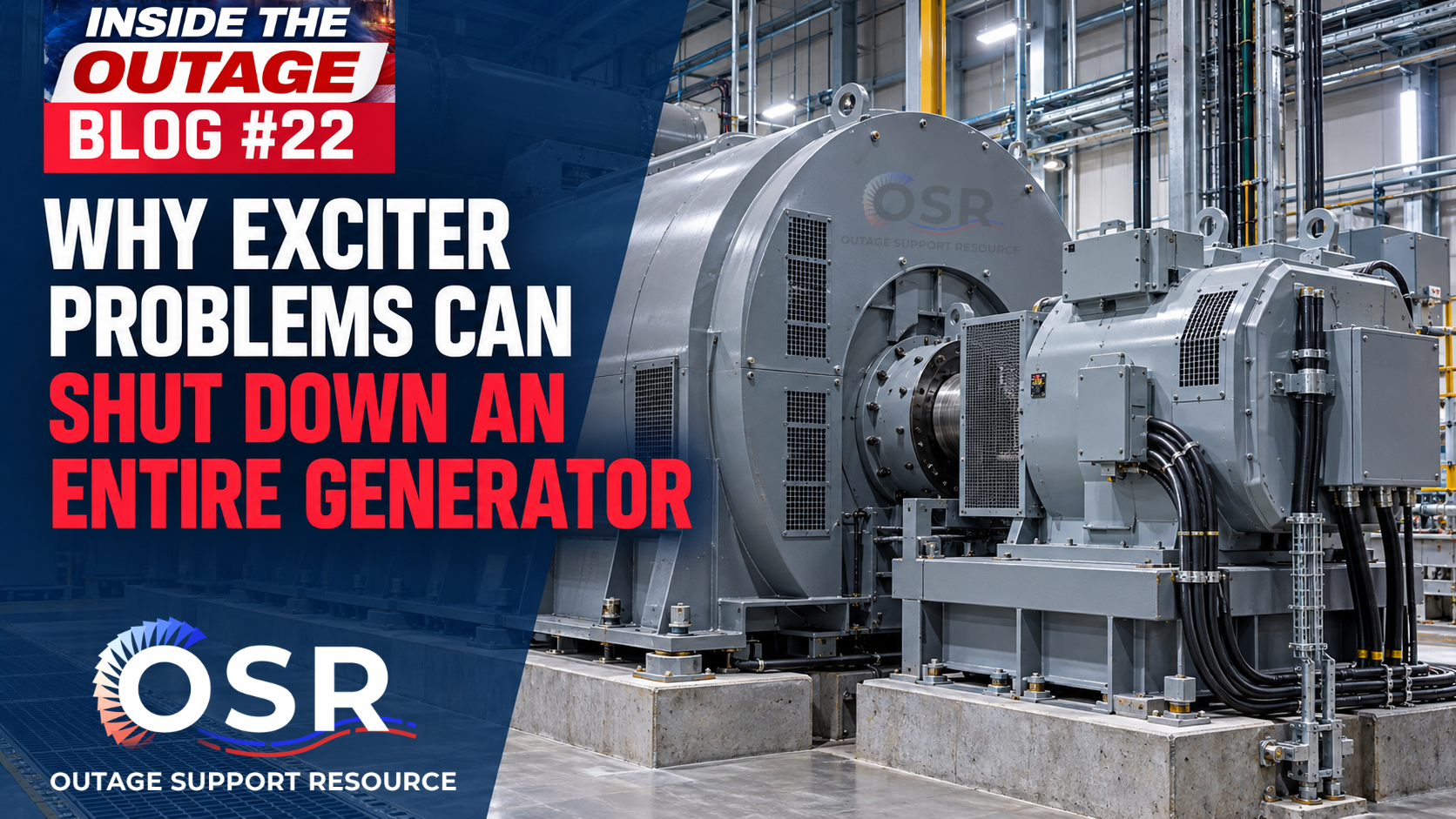
Why Exciter Problems Can Shut Down an Entire Generator
A utility-scale generator can have a healthy rotor, stator and prime mover and still be unable to remain online if its excitation system is not functioning correctly. The exciter establishes and controls the generator’s magnetic field. If that field becomes weak, unstable or unavailable, the generator may lose voltage control, experience abnormal reactive-power behavior or trip on protection.
In practical terms, an exciter problem can shut down an entire generator because the unit depends on controlled field current to maintain terminal voltage, synchronism and reactive-power output. Depending on the fault and protection scheme, the result may range from restricted operation to an immediate trip.
Excitation issues do not always begin with a dramatic failure. Many develop through heat, contamination, worn electrical contact surfaces, aging insulation, loose connections or component degradation. Recognizing the early indications gives plant teams a better chance to plan an inspection before a forced outage decides the schedule.
What Does a Generator Exciter Do?
The excitation system provides controlled direct current to the generator rotor field. That rotor field interacts with the stator to support the generator’s voltage and reactive-power output.
The automatic voltage regulator, commonly called the AVR, monitors operating conditions and adjusts excitation to maintain the selected voltage or reactive-power target. Although the terms are sometimes used interchangeably in conversation, the exciter and AVR are not the same component. The exciter produces or delivers field current; the AVR controls the excitation response.
Excitation systems vary by generator design. A unit may use:
- A brushless exciter with rotating rectifier diodes
- A static excitation system supplied through transformers and power electronics
- A brushed system using slip rings and carbon brushes
- A pilot exciter or permanent-magnet generator as part of the excitation chain
Because designs differ, troubleshooting should always follow the generator’s drawings, OEM limits, protection settings and operating history.
How Exciter Problems Affect Generator Operation
An excitation-system problem can affect much more than the exciter itself. A weak or erratic field can cause:
- Unstable generator terminal voltage
- Unexpected changes in reactive-power output or power factor
- Difficulty building voltage during startup
- Inability to synchronize or remain synchronized
- Rotor heating associated with abnormal excitation conditions
- Increased electrical and thermal stress
- Repeated alarms or protection operations
- Generator derating
- A loss-of-field or other protective trip
- Failure to start or return the unit to service
Generator protection is designed to prevent an electrical problem from becoming major equipment damage. When the excitation system moves outside acceptable conditions, a trip may be the protection system doing exactly what it was designed to do.
Common Warning Signs of an Excitation-System Problem
The exact symptoms depend on the system design and failed component, but plant personnel should investigate recurring changes such as:
1. Unstable Terminal Voltage
Voltage that hunts, drifts or responds abnormally to load changes may point to a control, sensing, connection or excitation-output issue. The AVR is not automatically the root cause; the full control and field circuit should be evaluated.
2. Unusual Reactive-Power or Power-Factor Behavior
Unexpected VAR swings, difficulty holding a reactive setpoint or a change in field current for similar operating conditions can indicate that the excitation system is no longer responding normally.
3. Field Current or Field Voltage Changes
A trend away from the unit’s normal baseline can provide an early warning. A single value rarely tells the whole story, so operators should compare load, terminal voltage, temperature and reactive-power conditions at the same time.
4. Exciter Temperature Increase
Abnormal heating may be related to poor connections, diode problems, brush or slip-ring condition, restricted cooling, contamination or excessive electrical loading. Infrared findings should be evaluated in context and confirmed using the plant’s approved procedures.
5. Brush Sparking or Abnormal Wear
On brushed systems, excessive sparking, rapid brush wear, uneven brush loading, dust accumulation or abnormal slip-ring surface condition can signal mechanical or electrical problems that require attention.
6. Repeated Diode, Fuse or Rectifier Alarms
In brushless systems, a failed or deteriorating rotating diode can disturb field current and increase stress on the remaining components. Repeated indications should not be treated as nuisance alarms without investigation.
7. Difficulty Building Voltage During Startup
If the generator does not build voltage normally, possible causes include loss of excitation supply, field-circuit discontinuity, control or sensing problems, failed rectifier components, inadequate field flashing or another condition specific to the installed design.
8. Protection Relays Operating Without an Obvious Generator Fault
Loss-of-field, overexcitation, underexcitation, volts-per-hertz and related protection events require a disciplined review of sequence-of-events data. Resetting and restarting without determining the cause may expose the unit to a repeat trip or greater damage.
Common Causes of Generator Exciter Problems
Failed or Degraded Rectifier Diodes
Brushless exciters commonly use a rotating rectifier assembly to convert AC output to DC field current. Open or shorted diodes, deteriorated connections and heat-damaged components can reduce excitation performance or create unbalanced electrical conditions.
Brush and Slip-Ring Deterioration
In brushed systems, poor brush seating, incorrect spring pressure, contamination, glazing, grooving, out-of-round slip rings and excessive brush dust can interfere with reliable field-current transfer.
Loose or High-Resistance Connections
Loose terminals, damaged flexible leads, cracked joints and high-resistance connections generate heat and may cause intermittent behavior that is difficult to reproduce once the unit is offline.
Insulation Degradation
Heat, age, moisture, vibration and contamination can weaken winding or lead insulation. Reduced insulation resistance or an emerging ground fault may progress until protection operates or excitation can no longer be maintained.
AVR, Sensing or Control-Circuit Problems
Bad sensing inputs, failed control cards, degraded power supplies, wiring defects or incorrect settings may produce symptoms that resemble an exciter hardware failure. Troubleshooting must verify both the control system and the power circuit.
Cooling and Contamination Issues
Oil mist, conductive dust, moisture, blocked filters or inadequate airflow can accelerate insulation aging and create tracking, overheating or electronic failures.
Vibration and Mechanical Damage
Abnormal vibration, looseness, misalignment or fatigue can damage leads, connections, supports and rotating components. Electrical symptoms may therefore have a mechanical contributor.
Incorrect Maintenance or Assembly
Wrong replacement parts, improper torque, reversed polarity, poor lead routing, incorrect brush grade or missed test steps can introduce problems during an outage. Configuration control and documented quality checks matter.
Why Exciter Failures Become Forced Outages
Excitation-system defects can move quickly from a manageable warning to a unit limitation or trip. The risk is not limited to lost generation. Continued operation under abnormal excitation may increase thermal stress, damage rotating components or create conditions that affect the generator rotor and stator.
The cost of a forced outage may include:
- Lost megawatt production
- Emergency labor and expedited parts
- Extended troubleshooting time
- Additional disassembly to locate collateral damage
- Restart delays caused by testing and protection review
- Schedule pressure that complicates quality control
A planned inspection gives the team time to gather data, define the scope, stage parts and coordinate mechanical, electrical and testing resources.
What Should Be Checked During an Exciter Inspection?
The inspection scope should match the unit design, symptoms and OEM requirements. Depending on the equipment, the work may include:
- Reviewing alarms, event records and operating trends
- Verifying AVR commands, sensing circuits and control power
- Inspecting terminal connections, leads, grounding and visible insulation
- Checking for heat discoloration, contamination, looseness and tracking
- Testing rotating rectifier diodes and associated components
- Inspecting fuses, surge suppressors and field-discharge components where applicable
- Evaluating brush condition, brush holders, spring pressure and slip rings
- Performing insulation-resistance and other appropriate electrical tests
- Checking exciter air gaps, bearings, alignment and mechanical condition when applicable
- Inspecting cooling paths, filters and ventilation
- Confirming protection operation and settings through qualified testing personnel
- Documenting as-found and as-left conditions
Testing must be performed by qualified personnel using procedures appropriate for the specific generator. Electrical isolation, stored energy, rotor access and test-voltage hazards require strict lockout/tagout and safety controls.
Repair, Replace or Continue Monitoring?
Not every abnormal indication requires complete exciter replacement. The correct response depends on the failed component, test results, damage extent, operating history, parts availability and OEM limits.
Potential corrective actions may include:
- Cleaning and correcting contamination sources
- Tightening or repairing electrical connections
- Replacing brushes, holders or related wear components
- Refinishing or repairing slip rings within approved limits
- Replacing failed rectifier diodes, fuses or surge components
- Repairing damaged leads or insulation using an approved process
- Correcting cooling or ventilation problems
- Repairing or replacing AVR and control components
- Rewinding or replacing an exciter component when testing confirms major deterioration
The decision should be supported by documented inspection and test results, not by whether the unit can simply be reset and restarted.
How Plants Can Reduce Exciter-Related Outage Risk
Strong excitation-system maintenance combines operating data with physical inspection and electrical testing.
- Establish normal baselines. Trend field voltage, field current, reactive power, terminal voltage and exciter temperature under comparable conditions.
- Investigate repeat alarms. Intermittent events can be the first sign of a deteriorating connection or component.
- Keep the equipment clean and cool. Correct contamination and ventilation problems before they accelerate aging.
- Use outage opportunities wisely. Inspect components that are inaccessible while the generator is operating.
- Document as-found conditions. Photos, measurements and test values improve future troubleshooting.
- Stage critical parts. Long-lead diodes, brush gear, control cards or specialty components can extend an outage if they are not available.
- Coordinate disciplines. Exciter problems may involve electrical testing, controls, generator specialists and mechanical field service.
When to Bring in Generator Field-Service Support
Outside support may be valuable when a plant sees unexplained voltage instability, repeated excitation alarms, abnormal brush wear, suspected diode failure, low insulation readings or a protection trip that requires generator disassembly and inspection.
OSR supports power-generation customers with generator outage and field-service resources, including inspection support, mechanical disassembly and reassembly, exciter and brush-rigging work, coordination with electrical testing teams, and emergent outage response. Scope is tailored to the specific unit, findings and customer requirements.
Early planning helps the plant define responsibilities, tooling, test support, parts and schedule before the unit is opened.
The Bottom Line
The exciter may be a smaller part of the generator train, but its role is essential. Without stable, controlled excitation, a synchronous generator cannot reliably regulate voltage and reactive power. Developing problems can lead to startup failures, derates, repeated alarms, protective trips and forced outages.
If your unit is showing excitation-system warning signs—or an upcoming outage provides a chance to inspect the generator, OSR can help your team evaluate the field-service scope and prepare the right resources.
If it turns, burns, or leaks, OSR is the solution.
Contact Outage Support Resource to discuss generator inspection, exciter work, brush rigging, electrical-test coordination or emergent field-service support for your next outage.

Outage Support Resource (OSR) provides expert field service solutions for power plants, LNG facilities, and petrochemical operations. Our services include turbine maintenance, outage planning, millwright services, refinery turnarounds, and emergency field service response.
With experienced crews and rapid mobilization, OSR supports critical infrastructure across the United States and Gulf Coast, helping reduce downtime, improve reliability, and execute outages with precision.
Key Words:
power plant outage planning, turbine maintenance, outage support services, refinery turnaround services, LNG plant maintenance, gas turbine inspection, steam turbine maintenance, generator maintenance services, industrial field service, rotating equipment maintenance, millwright services, outage planning checklist, turnaround maintenance planning, plant shutdown support, forced outage response, scheduled outage services, power generation maintenance, combined cycle plant maintenance, petrochemical maintenance services, reliability engineering, preventative maintenance planning, OSR outage support resource, field service technicians, turbine overhaul support, compressor inspection services