2026 I Inside the Outage: Outage Planning, Turbine Maintenance & Field Service Insights Blog

Inside the Outage:
Power Generation, People & Industry Insights.
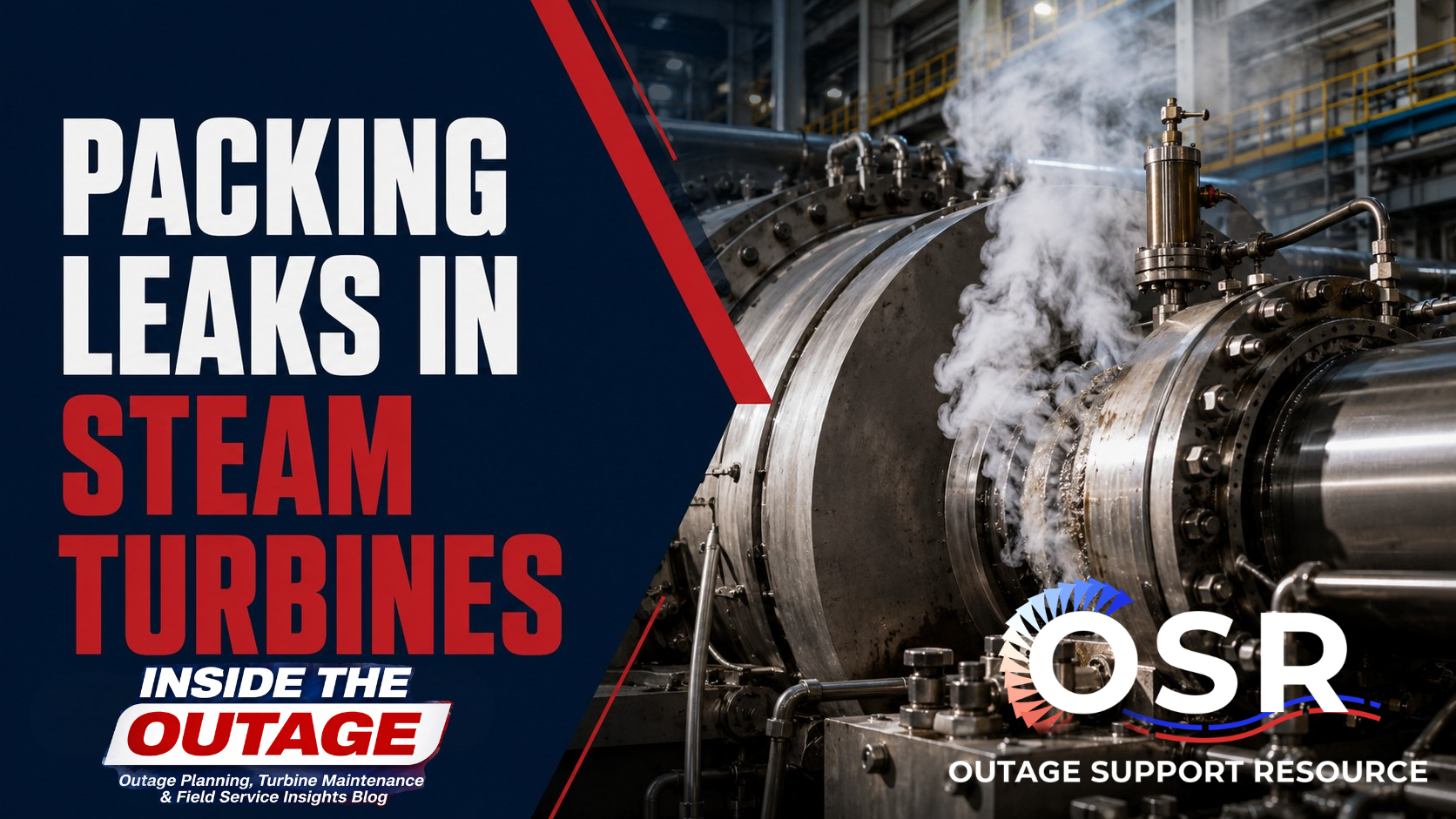
Packing Leaks in Steam Turbines: Causes, Risks, and Repair Considerations
A small wisp of steam near a turbine gland can be easy to dismiss, especially when the unit is still producing power. But packing and gland-seal leakage can indicate excessive clearance, wear, damage, poor sealing-steam control, misalignment, or another developing condition within the turbine.
Left unresolved, the leak may affect efficiency, condenser vacuum, heat rate, equipment condition, and personnel safety. It can also allow steam or air to move through areas where the turbine was designed to maintain controlled pressure.
Understanding the source of the leakage is essential. Tightening, adjusting, or replacing a component without identifying the cause can provide only temporary relief, or create additional damage.
What Does Turbine Packing Do?
Steam turbines require clearance between the rotating shaft and stationary casing components. Without an effective seal at those openings, high-pressure steam can escape from the turbine, and air can enter low-pressure sections operating under vacuum.
Packing or gland-seal systems restrict that unwanted flow while allowing the rotor to turn without contact. Depending on turbine design and location, the system may include labyrinth-style packing, segmented seal rings, springs, spill or leak-off connections, sealing-steam supply, exhauster equipment, and associated controls.
The objective is not always absolute zero leakage. The system is designed to control leakage safely and efficiently within established operating parameters.
Where Packing Leaks Occur
Leakage may develop at:
- High-pressure shaft-end glands
- Intermediate- or low-pressure gland areas
- Internal diaphragm packing
- Balance-piston or dummy-piston packing
- Valve stems and valve packing
- Horizontal joints or nearby casing interfaces that appear to be gland leakage
- Sealing-steam, leak-off, or gland-exhauster piping
Correctly locating the source matters because several nearby leaks can appear similar from outside the casing.
Common Causes of Steam Turbine Packing Leaks
1. Normal Wear and Increased Clearance
Packing surfaces wear over time. Repeated startups, shutdowns, thermal cycles, deposits, and long operating hours can increase clearances and allow more steam or air to pass through the seal.
2. Rotor-to-Packing Contact
A rub can damage seal teeth or packing segments and permanently increase clearance. Rubbing may result from vibration, differential expansion, rotor bow, casing distortion, misalignment, incorrect assembly, or operation through an abnormal condition.
3. Damaged, Stuck, or Incorrectly Installed Packing
Segments must be able to function as designed. Corrosion, deposits, broken springs, damaged teeth, incorrect clearances, improper orientation, or assembly errors can prevent the packing from sealing correctly.
4. Improper Gland-Seal Steam Pressure
Too little sealing steam can allow air to enter a low-pressure gland. Excessive pressure can push unnecessary steam outward or into the turbine and condenser system. Poor pressure control may create leakage even when the mechanical packing is in acceptable condition.
5. Gland Exhauster or Leak-Off Problems
Blocked drains, restricted piping, malfunctioning exhausters, damaged condensers, or incorrect valve positions can prevent the gland system from maintaining the intended pressure and flow.
6. Turbine Misalignment or Casing Movement
If the rotor is not centered within the packing, or if the casing and bearing positions change—the available radial clearance can become uneven. One side may rub while the opposite side develops excessive clearance.
7. Deposits, Contamination, and Corrosion
Steam impurities, corrosion products, oil contamination, or debris can affect segment movement, damage sealing surfaces, restrict drains, and interfere with the gland-seal system.
8. Thermal Expansion Problems
Incorrect differential expansion, improper warming, inadequate drainage, or casing distortion may temporarily or permanently affect packing clearances.
Warning Signs of a Packing or Gland-Seal Problem
Operations and maintenance teams should investigate:
- Visible steam near the shaft-end gland
- Increasing gland-seal steam demand
- Difficulty maintaining gland pressure
- Reduced condenser vacuum
- Increased air in-leakage
- Higher gland-exhauster loading
- Water or condensate collecting near the gland area
- Unusual hissing, whistling, or rubbing sounds
- Changes in shaft vibration or differential expansion
- Evidence of oil contamination or water intrusion near bearing housings
- Reduced turbine efficiency or worsening heat rate
- Repeated leakage after adjustment or repair
Trends are especially valuable. A gradual change in vacuum, exhauster load, gland pressure, or visible leakage may reveal deterioration before it becomes a more disruptive problem.
Why Packing Leaks Matter
Efficiency and Heat-Rate Losses
Steam escaping from a high-pressure area represents energy that is no longer producing useful work. Air entering a low-pressure section can reduce condenser performance and increase the work required to maintain vacuum.
Condenser Vacuum Problems
Low-pressure glands operate near or below atmospheric pressure. If the sealing system does not prevent air ingress, condenser vacuum can deteriorate, limiting output and affecting overall cycle efficiency.
Moisture and Oil-System Risks
Steam escaping near a bearing housing can condense. If moisture reaches the lubrication system, it can degrade oil condition and increase the risk of corrosion, poor lubrication, or bearing damage.
Damage to Nearby Components
Continuous steam exposure can damage insulation, coatings, instrumentation, electrical components, and nearby structural materials. Erosion or cutting may also occur where high-velocity leakage passes through a concentrated opening.
Personnel Safety
Steam may be difficult to see and can cause serious burns. Wet surfaces and condensate can also create slip hazards. Suspected leakage should be approached using the plant’s safety procedures and with awareness that pressure and temperature may be greater than they appear.
Larger Mechanical Problems
A packing leak may be the symptom—not the root cause. Misalignment, a rotor rub, abnormal thermal movement, casing distortion, or vibration can damage packing. Repairing only the seal without correcting the initiating condition can lead to another failure.
How Packing Leaks Are Diagnosed
A reliable diagnosis may include:
- Reviewing when the leakage occurs: startup, loading, full load, or shutdown
- Trending gland pressure, condenser vacuum, exhauster load, and sealing-steam demand
- Checking valve positions, drains, leak-off lines, and exhauster operation
- Inspecting for external steam paths and condensate
- Reviewing vibration, eccentricity, and differential-expansion data
- Inspecting packing segments, springs, teeth, fits, and clearances during an outage
- Checking rotor condition and evidence of rubbing
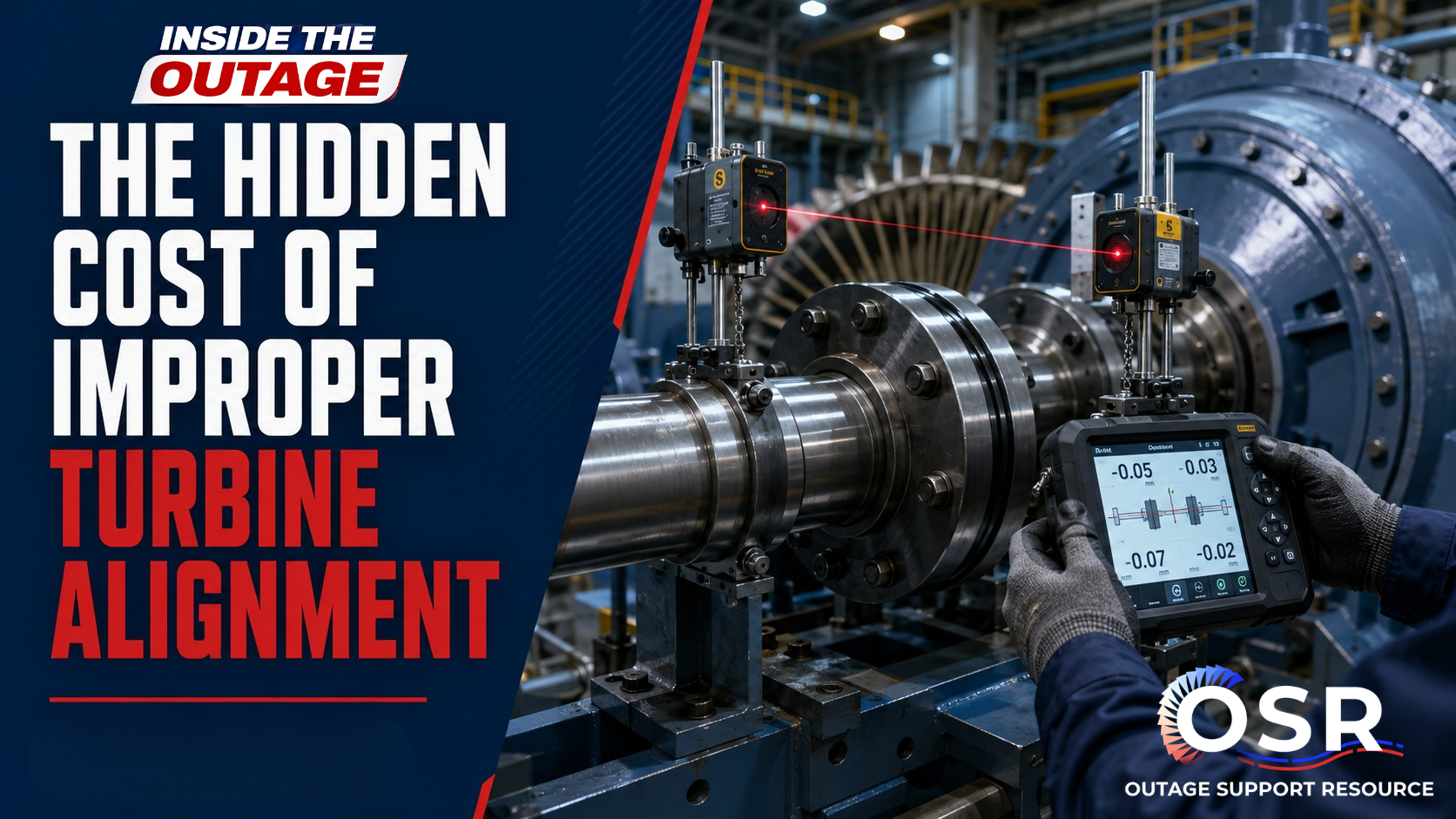
- Confirming bearing, casing, diaphragm, and rotor alignment
- Comparing as-found dimensions with OEM criteria and previous outage records
The turbine’s design and operating condition determine the correct inspection and repair approach. Any adjustment made while the unit is operating must follow plant procedures and applicable OEM guidance.
Repair Options During an Outage
Depending on the findings, corrective work may involve:
- Cleaning and freeing packing segments
- Replacing damaged or worn packing
- Restoring or replacing springs and hardware
- Correcting packing clearances
- Repairing seal or rotor surfaces when appropriate
- Clearing drains and leak-off passages
- Repairing gland-exhauster or sealing-steam components
- Correcting bearing, diaphragm, casing, or rotor alignment
- Addressing vibration, rubs, or thermal-growth problems
- Documenting final clearances and assembly condition
The correct clearance is critical. A clearance that is too large increases leakage; one that is too tight increases the risk of contact during startup, thermal growth, or operation.
Can a Packing Leak Wait Until the Next Outage?
That decision depends on the location, severity, operating trend, safety impact, and effect on vacuum or nearby equipment. A stable condition may sometimes be monitored until a planned outage, while rapidly increasing leakage, vacuum deterioration, water intrusion, abnormal vibration, or a suspected rub may require quicker action.
At minimum, the plant should document the condition, establish monitoring expectations, review relevant operating data, and define the trigger points that require escalation. Qualified plant personnel and engineering support should make operating decisions using unit-specific procedures and OEM criteria.
Reducing the Risk of Repeat Leakage
Plants can improve packing reliability by:
- Trending gland pressure, vacuum, air in-leakage, and exhauster performance.
- Using controlled warming, drainage, and startup practices.
- Inspecting packing whenever related turbine components are opened.
- Recording as-found and as-left clearances.
- Checking alignment when rubs or uneven wear are found.
- Keeping gland drains and leak-off piping clear.
- Correcting the root cause—not only the damaged packing.
- Reviewing repeat leakage across multiple outages for a common pattern.
OSR Steam Turbine Support
Outage Support Resource provides experienced field support for steam turbine inspections, maintenance, overhaul, packing and seal work, alignment, valve work, and emergent repairs. Our teams focus on identifying the actual condition, documenting the findings, and completing the work safely and efficiently.
If your plant is experiencing visible gland leakage, declining condenser vacuum, repeat packing damage, or another steam turbine concern, OSR is ready to help evaluate the problem and support the repair.
If it turns, burns, or leaks… we are The Solution.
Contact Outage Support Resource today to discuss your steam turbine or upcoming outage needs.
Frequently Asked Questions
Is some steam turbine gland leakage normal?
Gland-seal systems control steam and air flow, and acceptable behavior varies by turbine design and operating condition. A new, increasing, or excessive visible leak should be evaluated rather than assumed to be normal.
Can packing leakage reduce condenser vacuum?
Yes. Leakage at a gland in a low-pressure area can allow air to enter the turbine and condenser system, which may reduce vacuum and cycle performance.
Can turbine misalignment damage packing?
Yes. Misalignment or casing movement can leave the rotor off-center within the packing, producing uneven clearance and an increased risk of rubbing or leakage.
Does leaking packing always need replacement?
No. The cause may involve sealing-steam pressure, drains, leak-off piping, exhauster performance, alignment, or another system condition. Inspection should determine the root cause before the repair scope is finalized.


Outage Support Resource (OSR) provides expert field service solutions for power plants, LNG facilities, and petrochemical operations. Our services include turbine maintenance, outage planning, millwright services, refinery turnarounds, and emergency field service response.
With experienced crews and rapid mobilization, OSR supports critical infrastructure across the United States and Gulf Coast, helping reduce downtime, improve reliability, and execute outages with precision.
Key Words:
power plant outage planning, turbine maintenance, outage support services, refinery turnaround services, LNG plant maintenance, gas turbine inspection, steam turbine maintenance, generator maintenance services, industrial field service, rotating equipment maintenance, millwright services, outage planning checklist, turnaround maintenance planning, plant shutdown support, forced outage response, scheduled outage services, power generation maintenance, combined cycle plant maintenance, petrochemical maintenance services, reliability engineering, preventative maintenance planning, OSR outage support resource, field service technicians, turbine overhaul support, compressor inspection services