2026 I Inside the Outage: Outage Planning, Turbine Maintenance & Field Service Insights Blog
Inside the Outage:
Power Generation, People & Industry Insights.
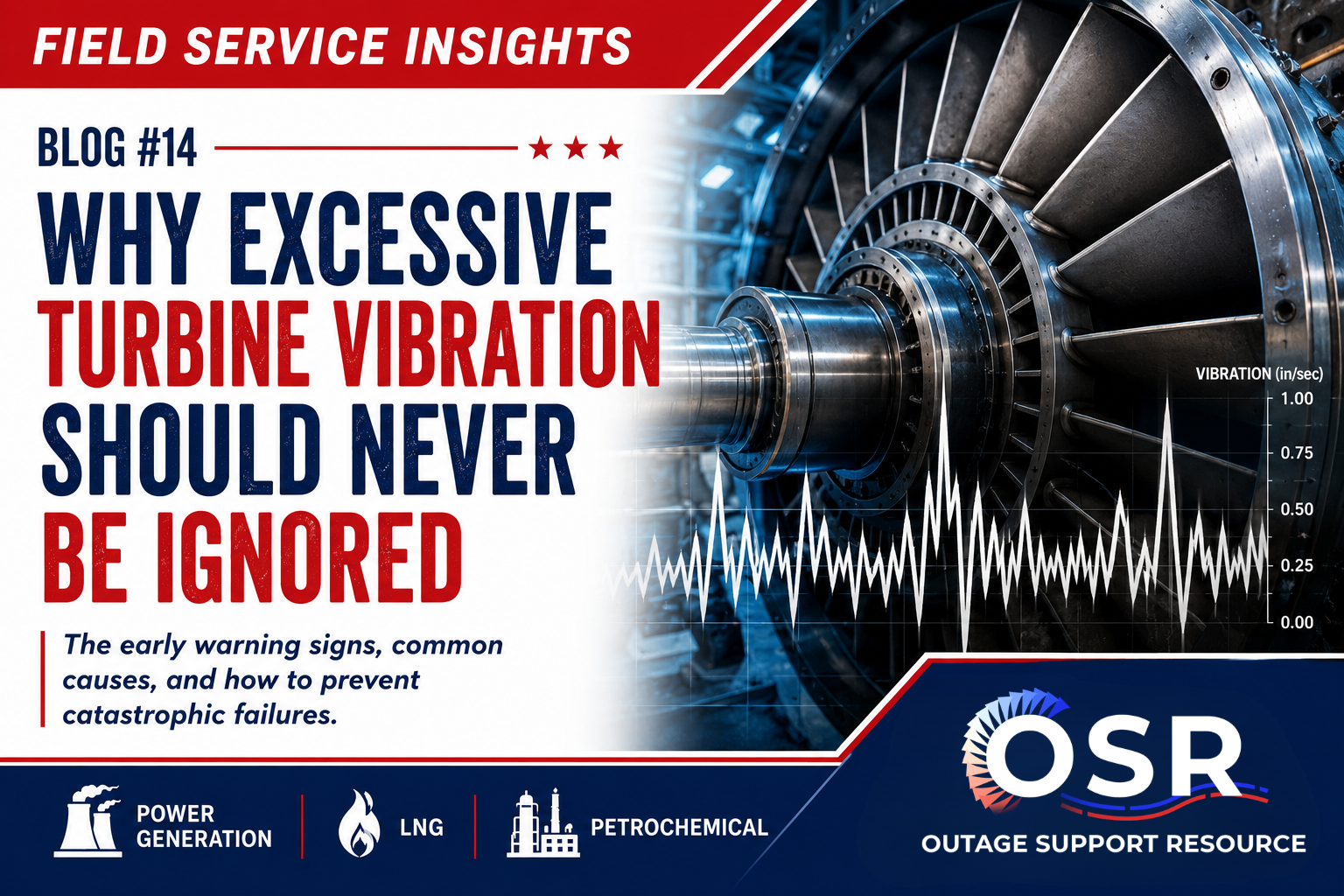
Why Excessive Turbine Vibration Should Never Be Ignored
Every rotating machine vibrates.
The question isn't whether vibration exists, it's how much, why, and whether it's getting worse.
For operators and maintenance teams, excessive turbine vibration is one of the earliest warning signs that something is changing inside the machine. Left unchecked, what begins as a slight increase in vibration can lead to bearing failures, seal damage, coupling wear, rotor contact, and even catastrophic equipment failure.
Whether you're operating a combined-cycle power plant, LNG export facility, refinery, or petrochemical plant, understanding vibration is essential to maintaining equipment reliability and preventing forced outages.
Experienced field service teams know that vibration isn't the problem, it's the symptom. Finding the root cause is what prevents downtime.
What Causes Turbine Vibration?
There isn't a single cause of turbine vibration. In most cases, vibration is the result of a developing mechanical issue somewhere within the rotating equipment.
The most common causes include:
- Shaft misalignment
- Rotor imbalance
- Bearing wear
- Loose components
- Foundation movement
- Thermal growth
- Coupling issues
- Blade damage
- Foreign object damage (FOD)
- Lubrication problems
Identifying which condition exists requires experience, precision measurements, and a systematic approach.
Misalignment: The Leading Cause
One of the most common contributors to excessive vibration is improper shaft alignment.
Even slight misalignment places additional stress on:
- Bearings
- Couplings
- Seals
- Rotors
- Shafts
As equipment continues operating, vibration gradually increases until other components begin failing.
Fortunately, alignment issues are also among the most preventable.
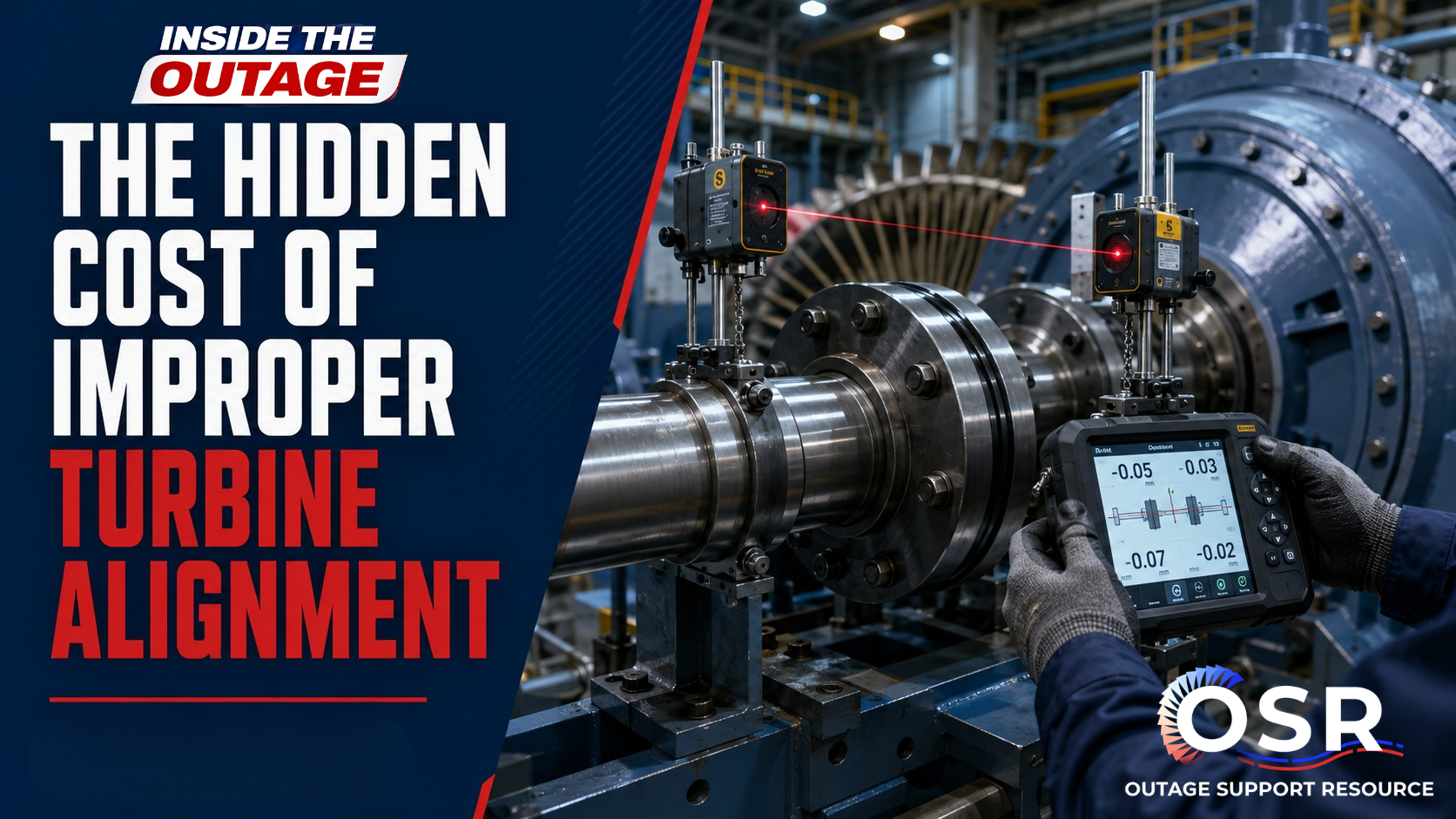
During planned outages, experienced millwrights use precision alignment equipment to verify that rotating components remain within manufacturer tolerances before startup.
Rotor Imbalance
Rotors spinning at thousands of RPMs require exceptional balance.
Small changes such as:
- Blade erosion
- Dirt buildup
- Missing balance weights
- Component repairs
- Foreign material
can create imbalance that produces continuous vibration.
Left untreated, imbalance increases loading on bearings and accelerates equipment wear.
Bearing Wear
Bearings support the rotor throughout operation.
As bearings begin wearing, rotor movement increases, creating higher vibration readings.
Common warning signs include:
- Rising vibration trends
- Elevated bearing temperatures
- Oil leaks
- Increased noise
- Reduced equipment efficiency
Early bearing inspections often prevent far more expensive repairs later.
Thermal Growth
Rotating equipment expands as temperatures increase.
If alignment isn't performed with thermal growth in mind, equipment that appears aligned during shutdown may become misaligned once operating temperatures are reached.
Experienced outage teams account for thermal growth during precision alignment procedures.
Blade Damage
Gas and steam turbines depend upon precisely engineered compressor and turbine blades.
Damage from:
- Foreign object ingestion
- Erosion
- Fatigue
- Cracking
- Tip rubs
can introduce imbalance that quickly appears in vibration data.
Routine inspections during outages help identify blade damage before it becomes a major reliability issue.
Warning Signs That Should Never Be Ignored
Facilities should investigate vibration whenever operators observe:
- Increasing vibration trends
- New vibration alarms
- Bearing temperature increases
- Oil leaks
- Unusual noises
- Shaft movement
- Coupling wear
- Declining efficiency
Waiting until vibration reaches trip limits often means the equipment has already suffered damage.
What Happens If Vibration Is Ignored?
Ignoring vibration rarely saves time or money.
Instead, it often results in:
Bearing Failures
Increased vibration accelerates bearing wear and lubrication breakdown.
Seal Damage
Excess shaft movement causes premature seal failure and oil leaks.
Coupling Damage
Misalignment and vibration place excessive loads on couplings, eventually causing cracking or failure.
Rotor Damage
Severe vibration can lead to rotor contact, rubbing, or catastrophic mechanical damage requiring extensive repairs.
Forced Outages
Unexpected shutdowns typically cost significantly more than correcting vibration during scheduled maintenance.
How Field Service Teams Diagnose Vibration
Experienced field service professionals don't simply measure vibration—they determine why it exists.
Common diagnostic activities include:
- Precision shaft alignment
- Generator vibration checks
- Rotor inspections
- Coupling inspections
- Bearing inspections
- Lubrication system evaluation
- Foundation inspections
- Thermal growth verification
The objective is to identify the root cause before returning equipment to service.
Precision Alignment Makes the Difference
Alignment is one of the highest-value maintenance activities performed during outages.
Proper alignment helps:
- Reduce vibration
- Extend bearing life
- Protect seals
- Improve efficiency
- Reduce maintenance costs
- Increase equipment reliability
Skipping alignment—or performing it incorrectly—often leads to recurring vibration problems after startup.
Field Tip
Never assume vibration is "normal" simply because the machine is still running. Trending vibration data over time often reveals developing problems weeks or months before failure occurs. Early intervention almost always costs less than emergency repairs.
Did You Know?
According to the U.S. Department of Energy, predictive maintenance technologies—including vibration monitoring—can significantly reduce unexpected equipment failures while improving overall plant reliability.
How OSR Helps Reduce Vibration Issues
Successful vibration correction requires more than instruments; it requires experienced field execution.
OSR supports outages across power generation, LNG, and petrochemical facilities with services including:
- Precision turbine alignment
- Generator vibration checks
- Bearing inspections
- Coupling replacement
- Rotor inspections
- Compressor blade repairs
- Turbine maintenance
- Major outage support
- Emergency field services
By identifying the source of vibration before startup, facilities reduce the risk of repeat outages and improve long-term equipment reliability.
Final Thoughts
Vibration is one of the earliest indicators that something inside your rotating equipment has changed.
Ignoring it doesn't make it disappear—it allows the problem to grow.
Whether the cause is misalignment, bearing wear, rotor imbalance, or thermal growth, early diagnosis and experienced field service can prevent major failures, reduce downtime, and protect valuable assets.
When it comes to turbine reliability, vibration is a warning worth listening to.
Related Reading
- Bearing Oil Leaks: Small Problem, Big Consequences
- Top Causes of Turbine Failure in Power Plants
- The Hidden Cost of Improper Turbine Alignment
Need Outage Support?
From precision alignment and vibration diagnostics to complete turbine and generator maintenance, OSR provides experienced field service teams that help keep critical facilities running safely, efficiently, and reliably.
If it turns, burns, or leaks… we're the solution.


Outage Support Resource (OSR) provides expert field service solutions for power plants, LNG facilities, and petrochemical operations. Our services include turbine maintenance, outage planning, millwright services, refinery turnarounds, and emergency field service response.
With experienced crews and rapid mobilization, OSR supports critical infrastructure across the United States and Gulf Coast, helping reduce downtime, improve reliability, and execute outages with precision.
Key Words:
power plant outage planning, turbine maintenance, outage support services, refinery turnaround services, LNG plant maintenance, gas turbine inspection, steam turbine maintenance, generator maintenance services, industrial field service, rotating equipment maintenance, millwright services, outage planning checklist, turnaround maintenance planning, plant shutdown support, forced outage response, scheduled outage services, power generation maintenance, combined cycle plant maintenance, petrochemical maintenance services, reliability engineering, preventative maintenance planning, OSR outage support resource, field service technicians, turbine overhaul support, compressor inspection services