2026 I Inside the Outage: Outage Planning, Turbine Maintenance & Field Service Insights Blog
Inside the Outage:
Power Generation, People & Industry Insights.
Bearing Oil Leaks: Small Problem, Big Consequences
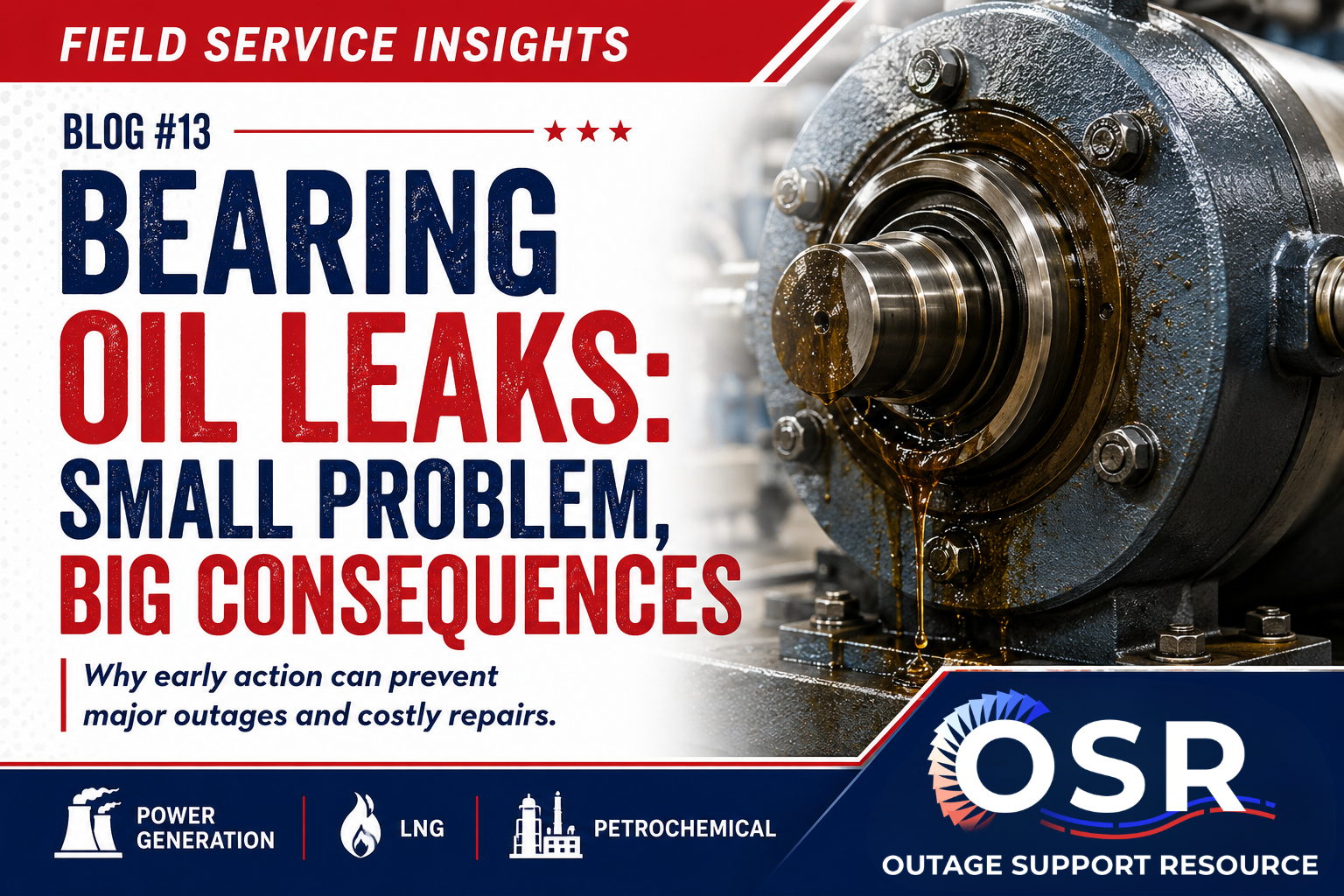
A few drops of oil beneath a turbine or generator may not seem like a serious concern. In fact, it's one of the easiest problems to dismiss during normal plant operations. However, experienced maintenance teams know that a bearing oil leak is often an early warning sign of a much larger reliability issue.
Whether operating a combined-cycle power plant, LNG export terminal, or petrochemical facility, rotating equipment depends on a properly functioning lubrication system. When that system begins leaking, it can quickly lead to increased vibration, elevated bearing temperatures, equipment damage, environmental concerns, and, in some cases, a forced outage.
According to the U.S. Department of Energy, proactive maintenance and early intervention are among the most effective ways to improve equipment reliability and reduce downtime. Addressing bearing oil leaks before they escalate can significantly reduce repair costs and help avoid unexpected shutdowns.
Why Bearings Matter
Bearings play a critical role in nearly every major piece of rotating equipment found in industrial facilities. They support the rotor, maintain shaft alignment, reduce friction, and allow equipment to operate efficiently under heavy loads and high speeds.
Common equipment that relies on properly lubricated bearings includes:
- Gas turbines
- Steam turbines
- Generators
- Compressors
- Pumps
- Gearboxes
- Auxiliary rotating equipment
Because these components operate continuously under demanding conditions, even a small oil leak can have significant consequences if left unresolved.
What Causes Bearing Oil Leaks?
Bearing oil leaks rarely occur without a reason. In many cases, the leak is a symptom of another mechanical issue that should also be investigated.
Worn or Damaged Seals
Over time, bearing seals naturally wear from heat, age, and continuous operation. Cracked, hardened, or damaged seals allow oil to escape from the bearing housing.
Common causes include:
- Normal wear
- High operating temperatures
- Improper installation
- Excessive shaft movement
- Chemical degradation
Replacing the seal alone may stop the leak temporarily, but identifying why the seal failed is equally important.
Excessive Vibration
One of the most common contributors to oil leaks is vibration. High vibration levels place additional stress on seals and bearing housings, causing them to deteriorate more quickly.
Vibration may result from:
- Shaft misalignment
- Rotor imbalance
- Loose components
- Bearing wear
- Foundation movement
Addressing the root cause helps prevent future failures.
Improper Assembly During Previous Outages
Some leaks begin immediately after maintenance work has been completed.
Improper gasket installation, incorrect torque values, damaged sealing surfaces, or contamination introduced during assembly can all contribute to premature leakage. This highlights why experienced field service teams and millwrights are essential during outage execution.
Elevated Oil Temperatures
Lubrication systems rely on maintaining proper oil temperature. When oil becomes excessively hot, seals deteriorate faster and lubrication effectiveness decreases.
Possible causes include:
- Fouled oil coolers
- Restricted oil flow
- Incorrect oil viscosity
- Cooling system issues
Monitoring oil temperatures can help identify developing problems before failure occurs.
Warning Signs You Should Never Ignore
Oil leaks often provide warning long before catastrophic failure occurs.
Watch for:
- Oil collecting beneath bearing housings
- Oil staining around seals
- Rising bearing temperatures
- Increased vibration readings
- Higher oil consumption
- Smoke or oil mist near equipment
- Burnt oil odors
- Declining equipment efficiency
Responding early usually means the difference between a scheduled repair and an emergency outage.
What Happens If the Leak Is Ignored?
Although some leaks appear minor, they rarely improve on their own.
Ignoring a bearing oil leak can result in:
Increased Bearing Wear
Reduced lubrication accelerates friction, increasing temperatures and shortening bearing life.
Equipment Damage
As bearings deteriorate, additional damage may occur to:
- Shafts
- Journals
- Seals
- Couplings
- Rotors
Repair costs rise dramatically once secondary damage develops.
Fire Hazards
Oil leaking onto hot surfaces creates a significant safety concern.
Power plants and petrochemical facilities take lubrication leaks seriously because of the potential for ignition around high-temperature equipment.
Environmental Concerns
Even relatively small leaks may require cleanup, reporting, or corrective action depending on facility policies and environmental regulations.
Forced Outages
Perhaps the greatest cost comes from lost production.
Unexpected shutdowns often require emergency mobilization, additional contractor support, expedited parts procurement, and extended downtime.
These expenses almost always exceed the cost of correcting the leak during a planned outage.
How Field Service Teams Solve the Problem
Repairing a bearing oil leak involves much more than replacing a gasket or tightening hardware.
Experienced field service teams begin by identifying the root cause before implementing repairs.
Typical outage activities include:
- Bearing housing inspection
- Seal replacement
- Surface restoration
- Alignment verification
- Shaft inspection
- Lubrication system inspection
- Vibration diagnostics
- Oil system cleaning
- Startup verification
This comprehensive approach helps prevent repeat failures once the equipment returns to service.
Why Precision Matters
Every thousandth of an inch matters when working on rotating equipment.
Precision alignment, proper torque procedures, accurate measurements, and quality control all contribute to long-term reliability.
An experienced millwright understands that solving the underlying problem—not simply fixing the symptom—is what keeps equipment operating between outages.
Field Tip
During every outage, inspect around bearing housings for oil residue, discoloration, or evidence of previous repairs, not just active leaks. These subtle signs often indicate alignment issues or seal deterioration that can become much larger problems after startup.
Did You Know?
Studies from the U.S. Department of Energy have shown that predictive maintenance programs can reduce maintenance costs by up to 30% while improving equipment availability and reducing unplanned downtime.
How OSR Supports Outage Success
Successful outages depend on experienced people executing the work correctly the first time.
OSR provides field service support across power generation, LNG, and petrochemical facilities, including:
- Bearing inspections and repairs
- Precision shaft alignment
- Turbine and generator maintenance
- Vibration troubleshooting
- Millwright services
- Rotating equipment installation
- Outage planning and execution
- Emergency field support
Whether addressing a minor oil leak or supporting a major outage, proper planning and skilled execution help improve reliability while minimizing downtime.
Final Thoughts
A bearing oil leak may begin as a few drops of oil beneath a machine, but it often signals a larger mechanical issue that deserves attention.
By identifying leaks early, understanding their root cause, and completing repairs during planned outages, facilities can improve reliability, reduce repair costs, and avoid unnecessary forced outages.
When it comes to rotating equipment, small warning signs should never be ignored.
Related Reading
- Top Causes of Turbine Failure in Power Plants
- How to Plan a Successful Power Plant Outage
- Signs Your Plant Needs an Outage Soon
Need Outage Support?
From turbine maintenance and generator repairs to precision alignment and emergency field service, OSR provides experienced professionals who help keep critical facilities operating safely and efficiently.
If it turns, burns, or leaks… we're the solution.

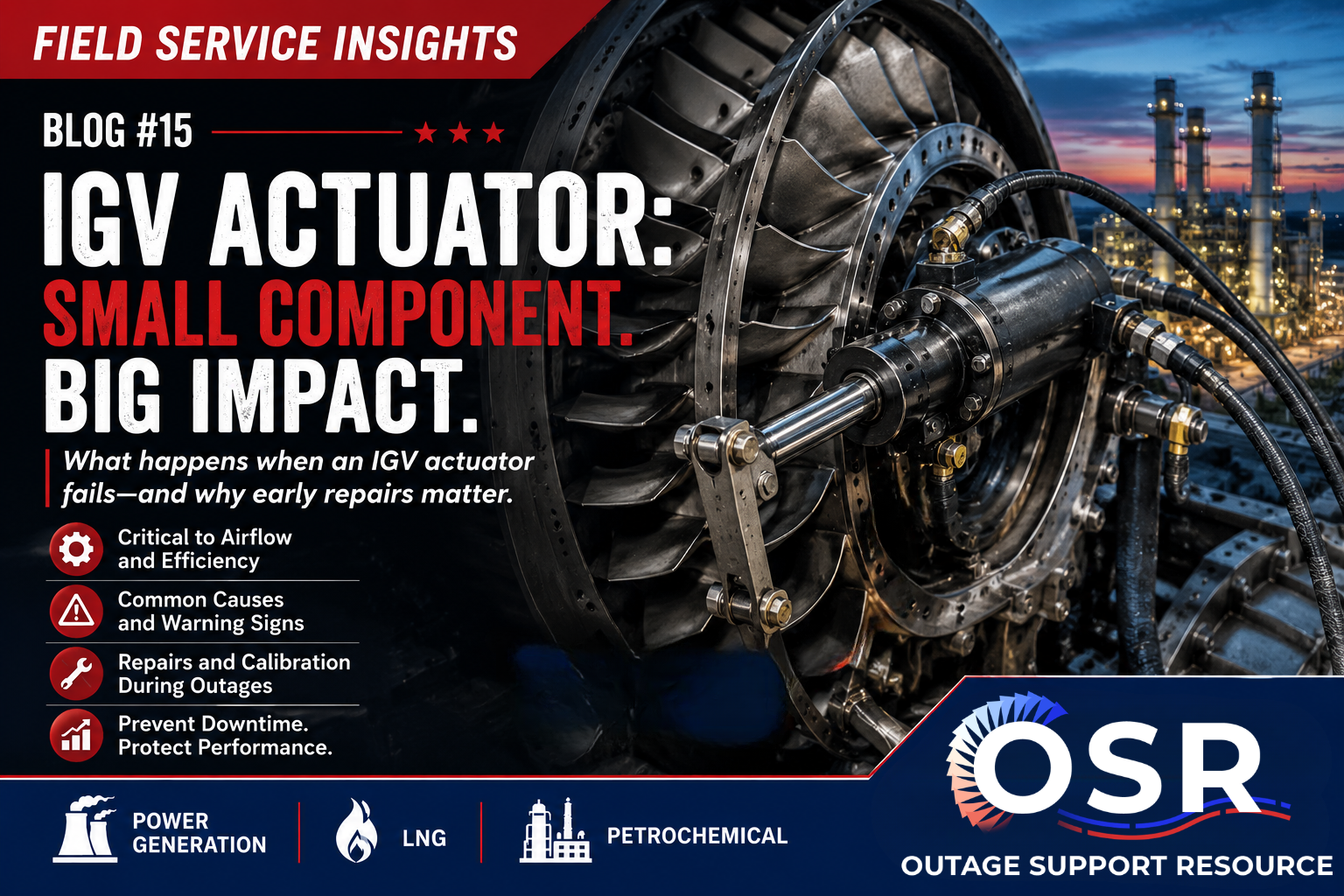
Outage Support Resource (OSR) provides expert field service solutions for power plants, LNG facilities, and petrochemical operations. Our services include turbine maintenance, outage planning, millwright services, refinery turnarounds, and emergency field service response.
With experienced crews and rapid mobilization, OSR supports critical infrastructure across the United States and Gulf Coast, helping reduce downtime, improve reliability, and execute outages with precision.
Key Words:
power plant outage planning, turbine maintenance, outage support services, refinery turnaround services, LNG plant maintenance, gas turbine inspection, steam turbine maintenance, generator maintenance services, industrial field service, rotating equipment maintenance, millwright services, outage planning checklist, turnaround maintenance planning, plant shutdown support, forced outage response, scheduled outage services, power generation maintenance, combined cycle plant maintenance, petrochemical maintenance services, reliability engineering, preventative maintenance planning, OSR outage support resource, field service technicians, turbine overhaul support, compressor inspection services